Restaurant Flash Sales: How to Fill Empty Hours with Nearby Customers
Post a flash offer at 2pm, 52 customers walk in by 5pm. Real-time hyperlocal sales to fill empty hours. Step-by-step guide with Amit's case study.
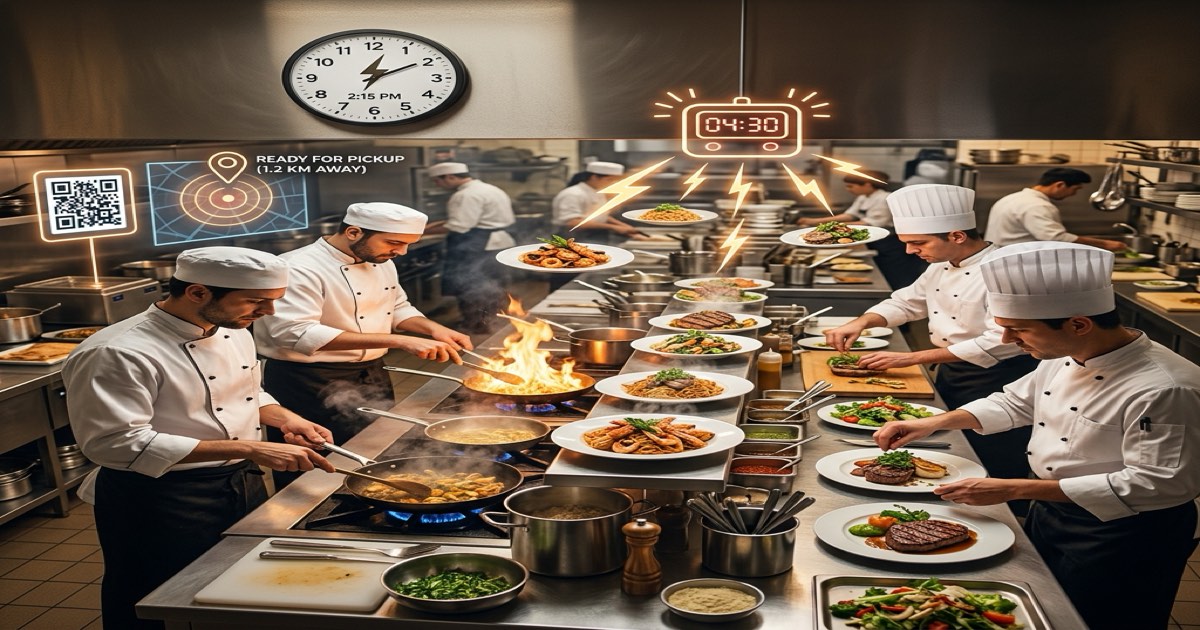
A restaurant flash sale is a real-time offer posted to customers within 2‑3 km of your location—and acted on within minutes. Unlike scheduled promotions that run for a week, flash sales target your slowest hours (Tuesday 2pm, Wednesday lunch) and fill them instantly. Amit's café posted a ₹500 flash offer on a slow Tuesday afternoon and got 52 customers within 3 hours. His process: 2pm offer posted, 2:15pm first customers arrive, 5pm total revenue ₹15,000.
Your 2-5 PM Slot Is Costing You ₹1,000+ Per Day
Most restaurants have a dead zone: 2-5 PM on weekdays.
A 100-seat restaurant open 8 hours (11am-7pm) has 800 seat-hours available daily. On a typical Tuesday: Lunch rush (11am-2pm) fills 120 seats. Dead zone (2-5pm) fills 20 seats. Dinner (5pm-7pm) fills 100 seats.
The dead zone has 300 empty seat-hours. At ₹200 per seat (food + drinks), that's ₹60,000 in lost revenue daily.
Per month: ₹60,000 × 20 working days = ₹12,00,000 in lost capacity.
Even if you capture 10% of that (30 customers/day at ₹200 each), that's ₹6,000/day or ₹1,20,000/month in new revenue.
A restaurant flash sale fills that slot by reaching people nearby right now.
How a Restaurant Flash Sale Works (Step by Step)
2:00 PM Tuesday — Your kitchen is staffed. Tables are empty.
You open DanikFlash Vendor Dashboard. You describe your offer: "₹200 flash offer — 1pm-5pm today only." You pick the duration (4 hours) and publish.
2:02 PM — Notification goes live.
500-2,000 people within 2‑3 km of your restaurant get a notification: "Fresh deal nearby: Amit's Café — ₹200 flash offer ends 5pm."
2:15 PM — First customers arrive.
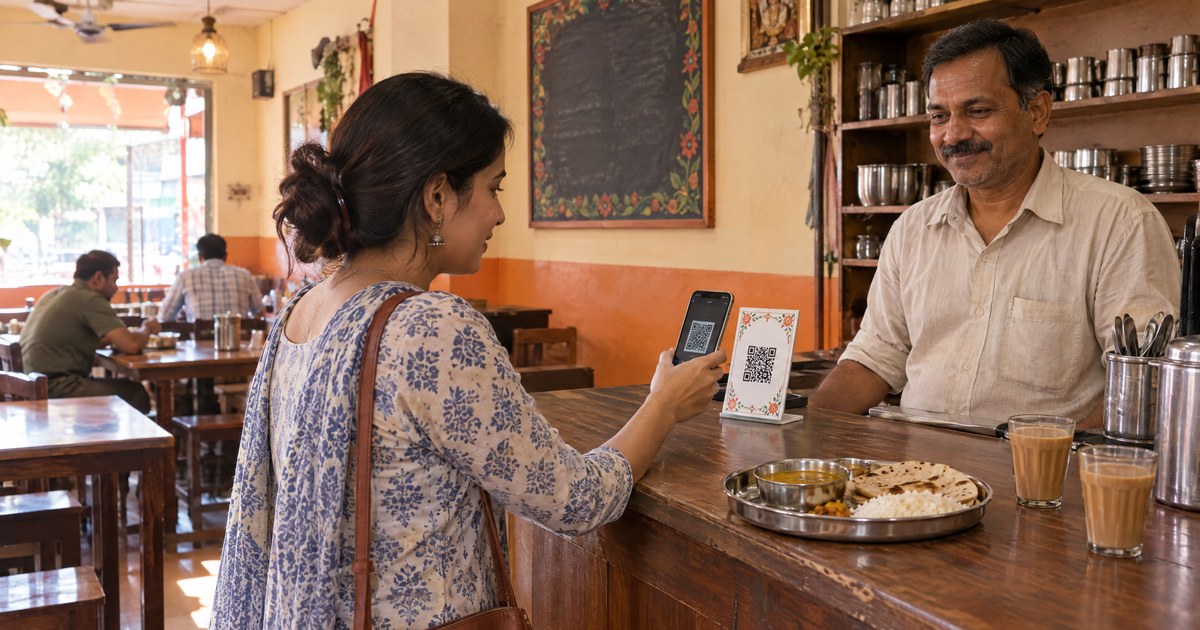
A nearby office worker sees the offer. Scans the QR code. Walks into your restaurant 5 minutes later. Eats. Leaves. You've captured a customer who would have gone home or to a competitor.
2:45 PM — Momentum builds.
More customers arrive. Word spreads: "There's a deal at Amit's café right now." Friends hear about it and forward the DanikFlash notification in their WhatsApp group. More walk-ins.
5:00 PM — End of offer.
By 5pm, 52 customers have redeemed offers. Your kitchen ran through 4 hours of stock. Your servers worked steady (instead of bored). Your revenue: ₹15,000 (52 customers × ₹250-300 average).
Your cost: ₹499/month + GST subscription. Your profit: ₹14,500 that day alone.
Why Flash Sales Beat Traditional Restaurant Promotions
| Factor | Traditional (Flex board) | Flash sale (DanikFlash) |
|---|---|---|
| Cost | ₹500-1,000/month | ₹499/month + GST |
| Results | 0-2 customers/week (missed while driving) | 20-50 customers/week (proven via QR) |
| Reach | Only people passing your storefront | Everyone within 2‑3 km checking their phone right now |
| Duration | Static (there 30 days) | 1-4 hours (matches your empty slot exactly) |
| Proof | None (you guess how many people saw it) | QR code tells you exactly who came and when |
A flex board costs ₹500/month and reaches maybe 100 people. A flash sale on DanikFlash costs ₹499/month + GST and reaches 500-2,000 people in your first hour.
Amit's Flash Sale Timeline (Real Example)
Tuesday, 2:00 PM: Café is empty. Lunch rush ended at 2pm, 4 hours until dinner starts at 6pm. Kitchen staffed (3 cooks standing around). Expected revenue this slot: ₹0.
Action: Post ₹500 flash offer — "₹200 off any meal, 2pm to 5pm today only" — 3-hour duration, published 2:02 PM.
2:15 PM — First redemptions: Nearby office worker scans QR code, walks in 5 minutes later, orders a ₹350 meal (after discount). Amit keeps ₹350 (100% of revenue).
2:45 PM — Momentum: 10 customers total. Revenue so far: ₹3,500. Amit's cost so far: ₹499 (already covered for the month).
3:30 PM — Peak hour: 30 customers total, more word-of-mouth walk-ins, kitchen at full capacity. Revenue: ₹9,000.
4:15 PM — Building toward end: 45 customers. Revenue: ₹13,500.
5:00 PM — Offer ends: 52 total customers. Total revenue: ₹15,000. Amit's cost: ₹499 (flat fee for the month). Amit's profit: ₹14,500 before food cost of ~₹5,000, ₹9,500 after.
Why this worked:
- Amit reached people nearby in real time
- He filled his dead zone (2-5 PM Tuesday)
- He had capacity to handle the traffic
- Customers walked in, not ordered delivery (higher margin)
- He owned the customer relationship, not a platform
This is what a restaurant flash sale does.
The Keys to Running a Successful Restaurant Flash Sale
1. Post during your dead zone. Not during your lunch rush (you're already full). Not during your dinner rush (you're already full). Post during 2-5 PM or slow morning hours, on slow days (Tuesday, Wednesday better than Friday).
2. Offer something real. Not a 5% discount (too small to justify the effort). 15-25% off is standard (₹200 off a ₹800 meal feels real). Offer a combo or specific dish, not "anything on the menu." Make sure you have capacity to fulfill it.
3. Have your kitchen ready. Don't post a flash sale at 11:55 AM if you're closing at noon. Make sure your staff is there and you have stock for 4+ hours of rush traffic. Have your POS system ready (QR scanning, order tracking).
4. Set a real deadline. 3-4 hours is ideal (matches your empty slot). 24-hour offers dilute urgency (people delay indefinitely). Real scarcity ("only today, 2-5pm") moves people now.
5. Track your redemptions. Every QR scan tells you a real customer came, with time, date, and offer. Use this data to repeat what works — Amit posts Tuesday flash sales now because Tuesday worked.
When NOT to Run a Restaurant Flash Sale
Don't post a flash sale if:
- Your kitchen is at capacity already (you'll burn out your staff)
- You don't have stock for 50+ customers (you'll run out mid-offer)
- Your staff isn't trained on QR scanning (redemptions will create confusion)
- You're in the middle of your busy service (focus on current customers first)
- You're closing tomorrow (offers build loyalty through repeat visits)
A flash sale fills empty capacity. It doesn't create capacity. If you're full, you don't need it.
How Flash Sales Build Customer Loyalty
Amit's first 52 customers came because of a discount. But here's what happens next:
They came for the deal. They stayed because the food is good. They come back because they remember the experience.
Fast forward one month: Amit isn't running flash sales anymore. His 2-5 PM slot is filling naturally. Customers are returning without discounts. He's running flash sales only during his slowest days now.
This is the compounding effect: One flash sale fills your empty slot. That customer likes your food and service. They tell 2 friends. They come back next week at full price. Your repeat customer base grows.
Over time, flash sales go from "how to fill empty capacity" to "how to reach new customers." You need fewer of them because your base business is stronger.
FAQ
Will running flash sales train customers to only buy discounts?
No. Amit ran flash sales for 2 weeks. Now most of his 2-5 PM customers come without discounts because word spread that his café is good. Flash sales bootstrap your reputation, not commoditize it.
How often should I run flash sales?
Start with 1-2 per week during your slowest slot. Track what works (day of week, time, discount level, offer type). Once your slow slot fills naturally, reduce to 1 per month or skip them entirely.
What if I post a flash sale and nobody comes?
Unlikely, but possible if your neighborhood is very quiet, your offer is too small to justify effort, or timing is wrong. Amit got 52 customers. Most get 10-30. Even 10 customers covers your ₹499 monthly cost (+ GST).
How is this different from Swiggy/MagicPin promotions?
Swiggy/MagicPin take 20-30% commission, own your customer data, and reach people on their platform. Flash sales on DanikFlash cost ₹499/month + GST flat, you own customers, and reach people nearby in real time. Also, Swiggy/MagicPin are delivery (lower margin) — flash sales bring people to your restaurant (higher margin).
Can I run a flash sale with a partner or multiple locations?
Yes. If you have multiple restaurants, each needs its own DanikFlash account (to target different neighborhoods). Each ₹499/month + GST gets you full access to that location's flash sale capabilities.
Your Empty 2-5 PM Slot Is Costing You Money Right Now
Every Tuesday at 2 PM, your tables are empty. That's ₹1,000-5,000 in lost revenue just sitting there.
A restaurant flash sale fills it. Amit posted one offer and got 52 customers. His revenue: ₹15,000. His cost: ₹499.
Your move: Identify your slowest 4-hour slot. Calculate your lost revenue (seats × hours × average spend). Post a flash sale there this week.
You'll know in 3 hours if it works. You'll know in one month if it changes your business.
Post your first flash sale today. First month free.
More from Vendor

Love this post?
Subscribe to get weekly tips, case studies, and vendor success stories from DanikFlash.